
Elbow Conditions Chandler, AZ
(480) 543-6700
1125 South Alma School Road
Suite 210
Chandler, AZ 85286
Monday - Friday | 8:00 AM - 5:00 PM
Specialties
Discover More Posts
The elbow is essential for daily function, allowing the arm to bend, rotate, and perform fine tasks. Because it is both a hinge and pivot joint, the elbow can be injured by trauma, repetitive motion, or degeneration. Elbow problems often cause pain, stiffness, and weakness that interfere with work, athletics, and simple activities like lifting or gripping.
Dr. Ryan Neeley provides specialized orthopedic care for elbow conditions in Chandler, Arizona and surrounding areas. His focus on patient education and evidence-based treatment helps individuals understand their condition and the recovery options available.
Anatomy of the Elbow
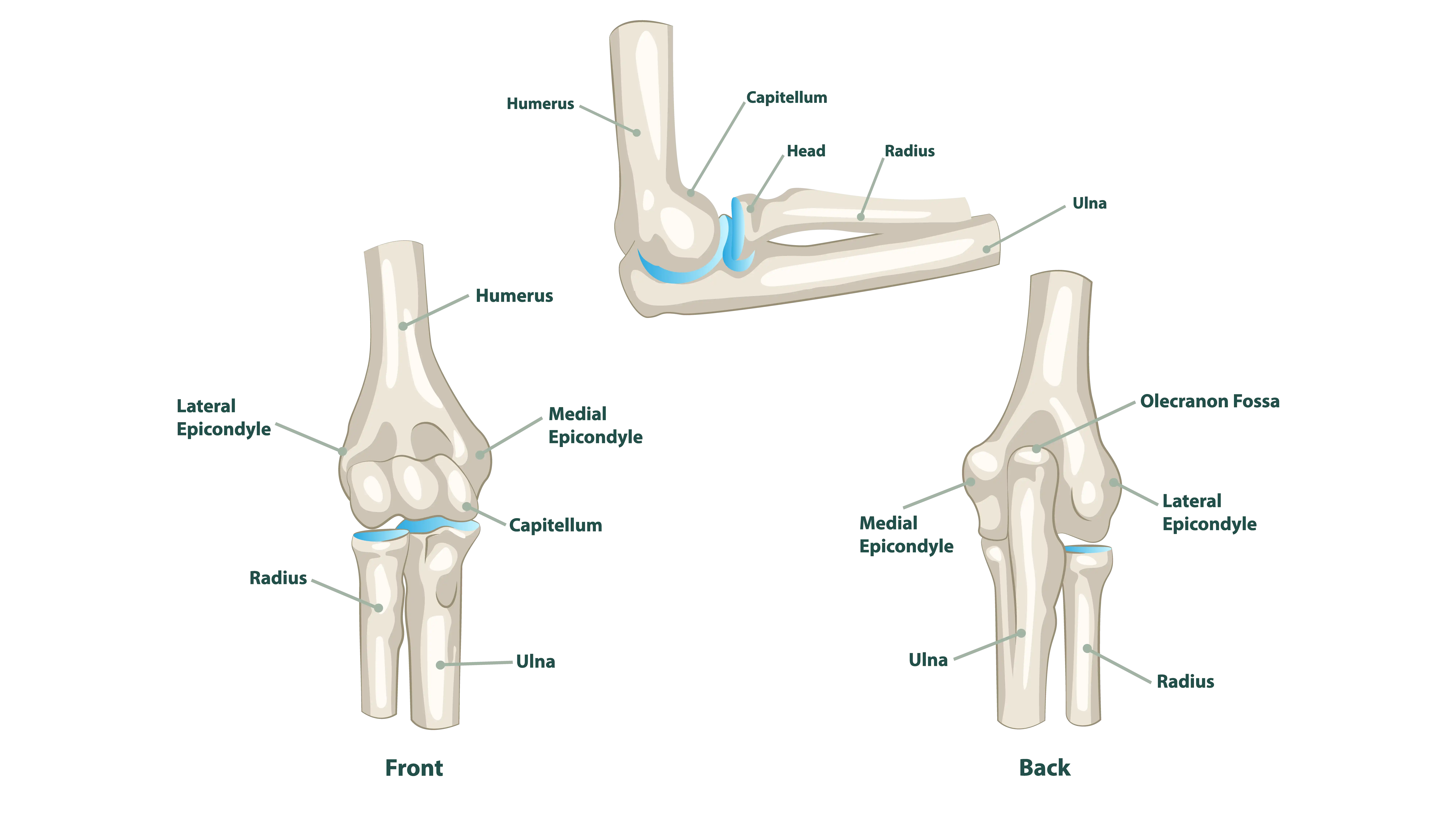
The elbow is formed by the articulation of the humerus, radius, and ulna. Stability comes from strong ligaments, including the ulnar and radial collateral ligaments, while muscles and tendons crossing the joint provide movement and power. Because of its complex structure, the elbow is prone to both acute injuries and chronic overuse disorders.
Common Elbow Disorders
Lateral Epicondylitis (Tennis Elbow)
This condition occurs when repetitive gripping or wrist extension leads to microtearing of the tendon that attaches to the lateral epicondyle. Patients usually develop pain on the outer side of the elbow, worsened by lifting or gripping.
Treatment emphasizes activity modification, therapy, and sometimes injections. Most cases improve within several months, though recovery can take longer if symptoms are severe.
Medial Epicondylitis (Golfer’s Elbow)
Repetitive stress on the flexor tendons of the wrist can cause pain along the inner aspect of the elbow. Patients may notice discomfort when bending the wrist, gripping tightly, or throwing.
Conservative management, including rest, therapy, and gradual return to activity, is highly effective. With adherence to treatment, most patients regain function within months.
Ulnar Collateral Ligament (UCL) Injury
The UCL stabilizes the elbow during throwing and heavy lifting. Injuries occur with repetitive overhead throwing or sudden valgus stress, common in athletes. Symptoms include pain on the inner elbow and loss of throwing velocity.
Early treatment focuses on rest, bracing, and strengthening, but surgical reconstruction may be needed for high-demand athletes. Recovery from reconstruction, often called Tommy John surgery, can take nine months to a year.
Distal Biceps Tendon Rupture
This injury typically occurs when lifting a heavy load with the elbow flexed. Patients often feel a sudden pop, pain in the front of the elbow, and loss of strength in bending and supination.
While some low-demand patients can manage without surgery, most benefit from surgical reattachment. Recovery after surgery involves a structured program, and patients often return to full function within several months.
Cubital Tunnel Syndrome
Compression of the ulnar nerve at the elbow causes numbness, tingling, and weakness in the ring and small fingers. Symptoms may worsen at night or with prolonged elbow flexion.
Treatment can include bracing, activity modification, and therapy, while surgery is reserved for severe or progressive cases. Recovery varies but often results in significant improvement when addressed early.
Elbow Arthritis
Degeneration of the joint cartilage may develop after trauma, repetitive use, or as part of generalized osteoarthritis. Patients typically report stiffness, pain with movement, and sometimes locking from loose bodies.
Nonoperative measures such as medications, injections, and therapy may help control symptoms. In more advanced cases, procedures like arthroscopy or total elbow arthroplasty restore motion and reduce pain, with recovery extending over several months.
Nonoperative Management
Most elbow problems begin with nonsurgical care. Rest, anti-inflammatory medication, bracing, and targeted physical therapy form the foundation of treatment. Injections may be used for persistent pain, and activity modification allows healing without compromising long-term function. Nonoperative management often restores comfort and mobility within weeks to months.
Indications for Surgery
Surgery is considered when nonoperative options fail or when structural damage makes healing unlikely. Examples include complete distal biceps ruptures, high-grade UCL injuries in athletes, and severe arthritis limiting function. The decision depends on symptom severity, patient goals, and activity demands.
Surgical Options
Modern elbow surgery includes both arthroscopic and open techniques. Arthroscopy allows removal of loose bodies, smoothing of rough cartilage, or treatment of stiffness. UCL reconstruction restores stability in throwing athletes. Distal biceps repair reattaches the tendon to bone, preserving strength. For advanced arthritis, procedures such as total elbow arthroplasty or radial head replacement may be performed, each with its own rehabilitation course.
Treatment & Recovery
Elbow treatment and recovery depend on the specific condition and procedure. Many problems respond well to conservative care within several months. After surgery, recovery is structured, beginning with protection and early motion, then progressing to strengthening and functional activity.
Full recovery may range from three months for minor procedures to a year for ligament reconstruction or joint replacement. With proper treatment and rehabilitation, most patients return to work, sports, and active living.
Elbow disorders can limit work, sports, and daily function, but with proper evaluation and treatment, recovery is possible. Dr. Neeley provides advanced reconstructive and care for the elbow, using evidence-based techniques and a patient-centered approach focused on education and long-term outcomes.