
Shoulder Conditions Chandler, AZ
(480) 543-6700
1125 South Alma School Road
Suite 210
Chandler, AZ 85286
Monday - Friday | 8:00 AM - 5:00 PM
Specialties

Discover More Posts

The shoulder allows for exceptional range of motion, but that same mobility makes it one of the most injury-prone joints in the body. From throwing injuries to arthritis, shoulder problems can interfere with both athletic performance and daily activities like lifting, reaching, or even sleeping comfortably. These conditions often progress slowly, leaving patients frustrated by persistent pain and loss of function.
Dr. Ryan Neeley provides comprehensive orthopedic care for shoulder disorders at Banner facilities in Chandler and surrounding communities. His approach emphasizes clear diagnosis, evidence-based treatment, and patient education, ensuring that each individual understands their condition and the options available for recovery.
Anatomy of the Shoulder
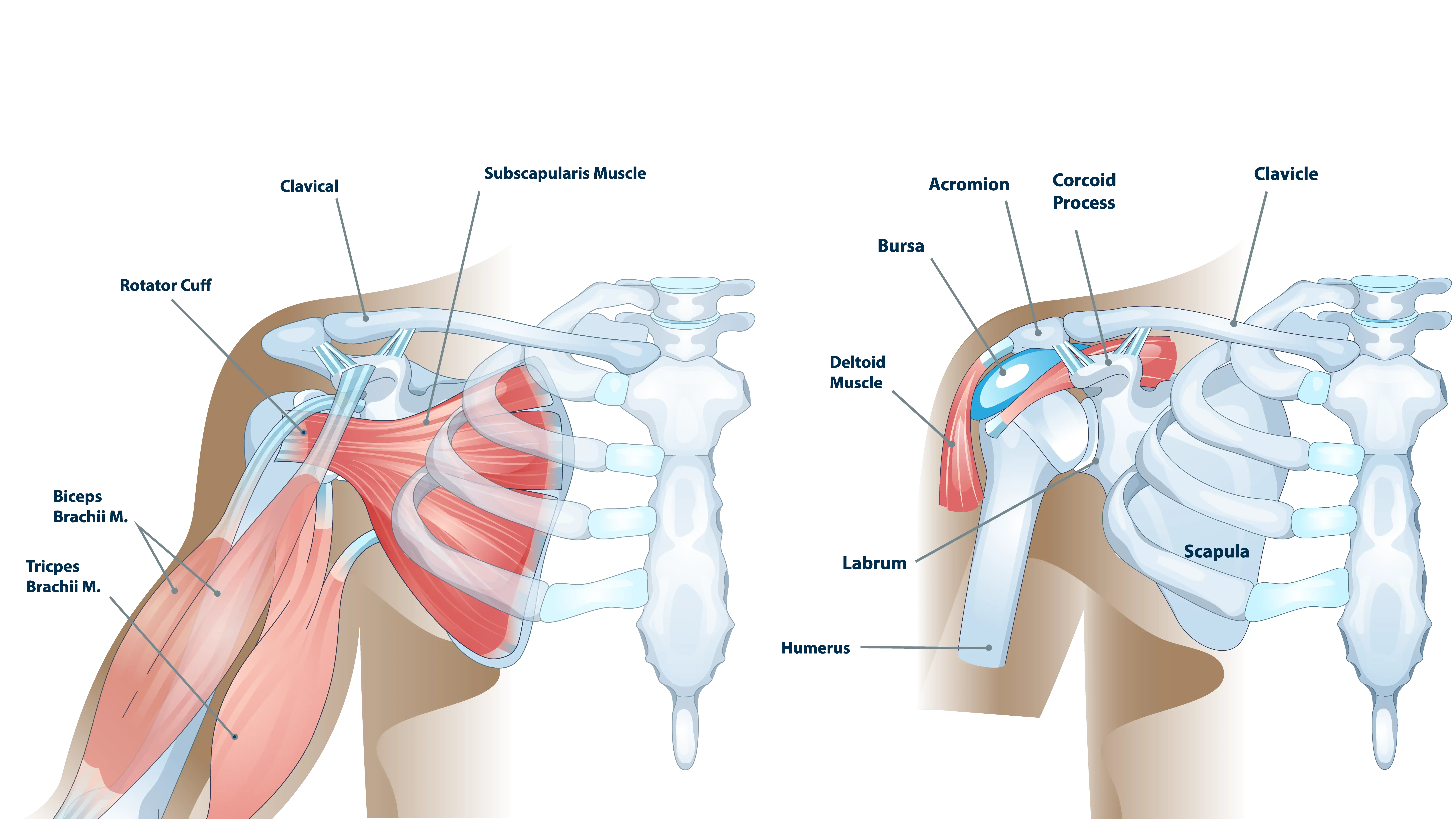
The shoulder joint is formed where the humeral head meets the shallow socket of the scapula, called the glenoid. Surrounding this joint are ligaments, the labrum, and the rotator cuff muscles and tendons, all of which contribute to stability. This design allows the shoulder to rotate, elevate, and extend through a greater range than any other joint, but it comes at the cost of structural vulnerability. Injuries often occur when stabilizing tissues are stretched or torn, or when wear over time leads to arthritis.
Common Shoulder Disorders
Rotator Cuff Tears
The rotator cuff is a group of four muscles and tendons that stabilize the shoulder and power overhead movements. Tears can occur gradually from repetitive overhead activity or suddenly from trauma, such as lifting a heavy object or falling. Patients typically report pain at night, weakness when lifting the arm, and difficulty reaching overhead.
Nonoperative treatments include activity modification, physical therapy, and injections to reduce inflammation. Surgery may be recommended for larger tears or when weakness persists, and recovery usually involves several months of progressive rehabilitation.
Shoulder Impingement Syndrome
Shoulder impingement occurs when the space beneath the acromion narrows, causing the rotator cuff tendons to rub painfully during elevation of the arm. This is common in individuals who perform repeated overhead motions, such as athletes and laborers. Symptoms include pain when reaching above shoulder level, discomfort at night, and sometimes weakness.
Initial treatment typically consists of physical therapy to improve biomechanics, along with anti-inflammatory measures. With consistent rehabilitation, most patients recover function in a few months, though surgery may be needed if symptoms do not improve.
Labral Tears & Shoulder Instability
The labrum deepens the shoulder socket and provides stability. Tears often result from a dislocation, fall, or repetitive throwing. Patients may feel a catching sensation, episodes of slipping or shifting in the joint, and pain during sports or overhead activity.
Treatment may begin with strengthening exercises, bracing, and activity modification. Surgical repair is often recommended for young athletes or patients with recurrent instability, and recovery can take six months or longer before return to high-level sport.
Biceps Tendon Pathology
The long head of the biceps tendon runs through the shoulder joint and can become irritated, frayed, or torn. This may occur with repetitive lifting, throwing, or as part of a rotator cuff tear. Patients notice pain at the front of the shoulder, cramping, or a “Popeye” deformity if the tendon ruptures.
Early management involves rest, therapy, and anti-inflammatory medications. In more severe cases, the tendon can be surgically repaired or reattached, and most patients regain strength and function within several months.
Shoulder Arthritis
Degeneration of the cartilage surfaces leads to stiffness, pain, and grinding in the shoulder joint. This condition typically develops with age but may also follow injury or instability. Patients often have progressive loss of motion and difficulty with daily activities.
Nonoperative options include medications, injections, and therapy to maintain function. When arthritis becomes advanced, shoulder replacement surgery offers reliable pain relief and improved motion, with recovery lasting several months and function continuing to improve for up to a year.
Adhesive Capsulitis (Frozen Shoulder)
Frozen shoulder occurs when the joint capsule thickens and tightens, leading to progressive stiffness and pain. The exact cause is often unclear, though it is more common in middle-aged adults and those with diabetes. Patients gradually lose both active and passive motion, often struggling even to reach behind their back.
Treatment emphasizes physical therapy, anti-inflammatory measures, and occasionally injections. Recovery can take many months, but most patients ultimately regain functional motion, even if some stiffness lingers.
Nonoperative Management
Most shoulder conditions can initially be treated without surgery. Physical therapy is central, focusing on strengthening the rotator cuff and scapular stabilizers while restoring range of motion. Medications and activity modification help control symptoms, and targeted injections can provide relief when pain limits progress. Nonoperative care requires patience but often restores function without the risks of surgery.
Indications for Surgery
Surgical treatment is considered when pain or dysfunction persists despite dedicated rehabilitation, or when structural damage is unlikely to improve on its own. Examples include full-thickness rotator cuff tears, recurrent dislocations, or advanced arthritis. The decision to proceed with surgery is individualized, taking into account patient goals, activity demands, and overall health.
Surgical Options
Modern shoulder surgery offers a range of techniques, many performed arthroscopically. Rotator cuff repair restores tendon attachment to bone, while labral repair or capsular reconstruction addresses instability. Biceps tendon repair or tenodesis relieves pain and restores function in cases of tendon rupture. Superior capsule reconstruction may be used in select cases of irreparable rotator cuff tears.
Total Shoulder Replacement
Total shoulder replacement is a procedure that replaces both the humeral head and the glenoid with prosthetic components. It is most commonly performed for advanced arthritis when the rotator cuff remains intact. Patients typically experience reliable pain relief and improved motion. Recovery involves a structured rehabilitation program lasting several months, with function often continuing to improve for up to a year.
Reverse Shoulder Replacement
Reverse shoulder replacement is commonly recommended for patients with arthritis and an irreparable rotator cuff tear. In this procedure, the ball-and-socket orientation of the shoulder is reversed, allowing the deltoid muscle to lift the arm in place of the damaged cuff. RSA has become a potential solution for cuff-deficient shoulders, providing pain relief and functional elevation. Recovery is gradual, often requiring up to a year, but most patients regain independence in daily activities.
Treatment & Recovery
Shoulder treatment requires a combination of accurate diagnosis, evidence-based therapy, and when indicated, surgical reconstruction or replacement. Recovery is rarely immediate and depends on the specific condition and procedure performed. For nonoperative cases, consistent therapy often restores motion and reduces pain within weeks to months.
For surgical cases, rehabilitation progresses in phases, beginning with protection and gentle motion, followed by strengthening and functional training. Return to sport or heavy activity may take six months to a year, but many patients achieve lasting improvements in pain, strength, and quality of life.
Shoulder conditions can disrupt work, athletics, and daily living, but with the right treatment plan, most patients regain motion and strength. Dr. Neeley provides advanced surgical and nonoperative care for shoulder disorders, combining fellowship training in reconstructive surgery with commitment to patient safety and education.