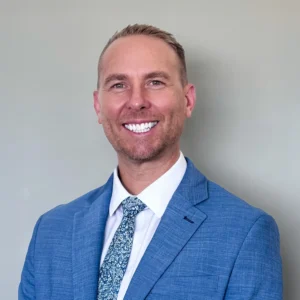


Medically reviewed by Ryan Neeley, DO | May 2026
The shoulder is one of the most complex joints in the human body. Because it sacrifices stability for mobility, diagnosing and treating shoulder problems often requires a different level of expertise than many other orthopedic conditions. Whether you are dealing with a rotator cuff tear, shoulder instability, arthritis, or a failed prior surgery, the experience of your surgeon can directly influence your diagnosis, treatment options, and long-term outcome.
As a fellowship-trained shoulder and elbow surgeon, I completed an additional year of specialized training focused exclusively on shoulder and elbow conditions after orthopedic residency. That experience provided exposure to hundreds of complex cases and helped develop the pattern recognition that comes from treating the same problems every day.
Key Takeaways
- Fellowship training provides an additional year of shoulder and elbow specific surgical education after orthopedic residency.
- Many shoulder conditions can mimic one another, making accurate diagnosis critical.
- Research shows that higher-volume shoulder surgeons often achieve lower complication and revision rates.
- Specialized evaluation may be particularly important for rotator cuff tears, shoulder instability, arthritis, and shoulder replacement surgery.
Understanding Why the Shoulder Is Different
The shoulder has the greatest range of motion of any joint in the body. Unlike the hip, which is inherently stable because of its deep socket, the shoulder relies on a complex combination of muscles, tendons, ligaments, cartilage, and bone to maintain stability and function.
Because so many structures work together, different shoulder problems often produce similar symptoms. A rotator cuff tear can mimic arthritis. Shoulder instability can feel like weakness. Early arthritis may be mistaken for tendonitis. Accurate diagnosis often requires a detailed examination, advanced imaging, and a deep understanding of shoulder mechanics.
This complexity is one reason many patients seek evaluation from a shoulder specialist when symptoms persist despite treatment.
What Fellowship Training Actually Means
Orthopedic surgery residency is five years. That training has to cover everything: hip and knee replacement, spine, hand, foot, and ankle. It’s broad.
Fellowship is a separate year after residency where you focus on one thing. In a shoulder and elbow fellowship, that means operating on shoulders and elbows almost every day. You see complex reconstructions, revisions, unusual fracture patterns, and failed prior surgeries that most general orthopedic surgeons encounter only a handful of times in an entire career.
By the time I finished my fellowship, I had assisted on or performed more reverse shoulder replacements in one year than many general orthopedic surgeons perform in a decade. That repetition shapes how you think, how you plan, and how you execute.
What the Research Actually Shows
A question I get often is whether surgeon selection changes outcomes. Studies published have shown that higher-volume shoulder surgeons have lower complication rates and lower revision rates. Fellowship-trained shoulder surgeons specifically show lower complication rates compared to general orthopedic surgeons performing the same procedures. While volume alone does not guarantee a good outcome, experience matters.
Shoulder replacement is a good example of why. Glenoid positioning is one of the most technically demanding parts of the procedure. Even small deviations in implant placement increase stress at the bone-implant interface and can lead to earlier loosening or failure. Getting that positioning right consistently requires a volume of experience that general training doesn’t provide.
Why the Shoulder Requires Careful Evaluation
The shoulder trades stability for mobility. No other major joint does that to the same degree, and that tradeoff creates a lot of ways things can go wrong that aren’t obvious without deep familiarity with the joint.
In my practice in Chandler, I regularly see patients who’ve spent three to six months in physical therapy for what was called a rotator cuff strain. When I evaluate them, the actual problem is posterior instability, a labral tear, or early arthritis with posterior glenoid wear. These are common diagnoses, but they look like other things, and they’re easy to miss if you don’t focus on the shoulder.
Three Situations Where Specialist Evaluation Makes the Biggest Difference
Not every shoulder problem requires a specialist, but there are situations where the stakes are high enough that I’d always recommend seeing someone with dedicated shoulder training.
The first is rotator cuff tears, particularly larger or chronic tears. Treatment decisions involve more than simply determining whether a tendon is torn. Factors such as tear size, tendon quality, muscle atrophy, patient age, activity level, and timing of surgery all influence outcomes. Determining whether a tear is repairable, whether augmentation may help, or whether a shoulder replacement is ultimately a better option requires experience treating the full spectrum of rotator cuff disease.
The second is shoulder instability, especially in younger patients. Recurrence rates after a first dislocation in patients under 25 can be as high as 90 percent without surgery. Every additional instability event causes more structural damage and makes future surgery more complex. Getting the right evaluation early can prevent that cycle entirely.
The third is shoulder replacement. Implant selection, glenoid deformity correction, and precise positioning all require specialized planning. For every shoulder replacement I perform, I obtain a CT scan and build a 3D model of the patient’s anatomy before surgery using a specialized surgery planning software such as ProVoyance®. General orthopedic training doesn’t routinely teach that level of pre-operative planning, because it’s specific to shoulder arthroplasty.
What Patients Get Wrong About Orthopedic Referrals
In most health systems, referrals go to whoever is available or in-network. That surgeon may be excellent, but their primary focus might be hip and knee replacement. Their annual shoulder volume might be low. Ask directly: how many shoulder procedures do you perform each year, and did you complete a shoulder fellowship? A surgeon who focuses on shoulders won’t be bothered by that question. You also don’t always need a referral to see a specialist. You can often call directly and schedule a consultation. A second opinion is also reasonable when surgery has been recommended. Shoulder specialists frequently evaluate patients seeking confirmation of a diagnosis or wanting to better understand their treatment options.
When Should You See Dr. Neeley?
My practice in Chandler focuses exclusively on shoulder, elbow, and sports medicine conditions. I’d encourage you to schedule an evaluation if you’re dealing with any of the following:
- Persistent shoulder pain.
- A feeling that your shoulder might slip, give way, or just doesn’t feel stable.
- Shoulder stiffness limiting your daily activities, sleep, or athletic performance.
- A prior shoulder surgery that isn’t healing the way you expected.
I see patients from across the Phoenix metro area, including Chandler, Gilbert, Tempe, Mesa, Scottsdale and Maricopa, as well as patients traveling from out of state for complex reconstruction or revision surgery.
Summary
Fellowship training matters because shoulder problems are often more complicated than they initially appear. The shoulder’s unique anatomy and mechanics create diagnostic and treatment challenges that benefit from specialized experience. Research consistently shows that surgeon volume and specialization can influence outcomes, particularly for complex procedures such as rotator cuff repair, instability surgery, and shoulder replacement. For many patients, seeing the right specialist early can lead to a more accurate diagnosis, a more efficient treatment plan, and a better long-term result.
Frequently Asked Questions
What’s the difference between an orthopedic surgeon and a fellowship-trained shoulder specialist?
Residency covers the full musculoskeletal system over five years. Fellowship adds a year of training focused entirely on one area. For shoulder surgery, that means a higher volume of shoulder-specific cases and procedures before ever practicing independently. The difference shows up in how surgeons diagnose, plan, and execute complex cases.
Do I need a referral to see Dr. Neeley?
You can often call my office directly to schedule a consultation. If your insurance requires a referral, your primary care physician can typically provide one.
How do I know if my shoulder needs a specialist or if my regular doctor can manage it?
If your symptoms have persisted more than six to eight weeks, aren’t improving with therapy, involve any sense of instability, or followed a significant injury, see a specialist. The shoulder is specific enough that general practitioners and even general orthopedic surgeons can miss conditions that a dedicated shoulder surgeon would catch quickly. Earlier is almost always better.
Should I see a shoulder specialist before starting physical therapy?
Not necessarily. Many shoulder problems improve with rest, activity modification, anti-inflammatory medications, and physical therapy. However, if symptoms persist beyond several weeks, follow a traumatic injury, involve instability, significant weakness, or interfere with sleep and daily activities, evaluation by a shoulder specialist may help identify the underlying problem and prevent delays in treatment.