


If you are considering a total shoulder replacement, or if you have already had one, one of the most important things to understand is what may happen over time.
Among the long-term considerations after anatomic total shoulder replacement, glenoid loosening remains one of the most discussed. This occurs when the socket side of the implant gradually loses its bond with the bone, which can lead to pain, decreased function, and in some cases, the need for revision surgery.
The good news is that modern shoulder replacement outcomes are better than ever, and our understanding of glenoid loosening has improved significantly over the last several years.
In this post, we’ll break down what glenoid loosening is, why it happens, what current research shows about implant longevity, and what truly makes a difference in long-term outcomes.
Key Takeaways
- Glenoid loosening remains an important long-term consideration, but modern implants demonstrate excellent survivorship (often >90–95% at 10 years)
- Loosening is usually related to mechanics and implant positioning, not just the implant itself
- CT-based 3D planning improves accuracy, which may support implant longevity
- High-volume, fellowship-trained shoulder surgeons have lower complication and revision rates
- Long-term success depends on surgical technique, implant selection, and patient engagement
Understanding Your Shoulder
Your shoulder is a ball-and-socket joint made up of three bones: the humerus (upper arm), scapula (shoulder blade), and clavicle (collarbone). The ball, or humeral head, sits in a relatively shallow socket called the glenoid.
Unlike the hip, which is deep and inherently stable, the shoulder sacrifices stability for mobility. This allows for a wide range of motion, but also means the joint depends heavily on surrounding structures to stay balanced.
The joint surfaces are lined with smooth cartilage that allows for low-friction movement. Stability and motion are controlled by:
- The rotator cuff, which keeps the ball centered in the socket
- The deltoid muscle, which powers elevation
- The labrum and capsule, which provide additional stability
Over time, shoulder arthritis or injury can wear away cartilage, leading to pain, stiffness, and loss of function. Importantly, this wear is often not symmetric.
Many patients develop:
- Posterior glenoid bone loss
- Subtle posterior subluxation of the humeral head
- Changes in joint alignment and loading
This matters because shoulder replacement is not just about replacing cartilage; it’s about restoring mechanics.
If the underlying deformity and mechanics are not corrected, abnormal forces can persist after surgery and contribute to long-term implant stress and early implant loosening.
What Is Glenoid Loosening?
In a total shoulder replacement, the glenoid (socket) is resurfaced with an implant, typically made of polyethylene.
Glenoid loosening refers to:
- Loss of fixation between the implant and bone
- Micromotion at the interface over time
- Potential symptoms such as pain, stiffness, or mechanical changes
It is important to understand that not all loosening seen on imaging causes symptoms, and many patients function well for years without clinical issues.
Why Does Glenoid Loosening Happen?
Glenoid loosening is typically the result of multiple factors interacting over time.
1. Implant Positioning and Surgical Precision
Even small deviations in position can increase stress at the bone-implant interface. Over time, this may contribute to loosening.
This is one of the most important technical aspects of the procedure.
2. Shoulder Mechanics and the “Rocking Horse” Effect
If forces across the joint are not evenly balanced, the humeral head can apply eccentric pressure to the glenoid.
This creates a repetitive tipping motion often referred to as the “rocking horse” effect which gradually weakens fixation over thousands of cycles.
This is commonly seen in patients with:
- Posterior glenoid wear
- Rotator cuff imbalance
- Residual subluxation
3. Bone Quality and Glenoid Deformity
Patients with:
- Posterior bone loss
- Glenoid retroversion
- Lower bone density
These patients may have a higher baseline risk if these issues are not addressed during surgery, although some recent studies have challenged the importance of restoring retroversion.
What Does the Latest Research Show About Longevity?
Recent studies over the past 5–7 years have shown:
- Implant survivorship exceeding 90–95% at 10 years for modern anatomic shoulder replacements
- Glenoid loosening and rotator cuff failure remain the most common causes of revision, but occur less frequently than historically reported
- Outcomes are strongly influenced by implant positioning and restoration of mechanics, not just implant design
The takeaway: modern shoulder replacement is highly reliable when planned and performed appropriately.
Modern Implant Design and 3D Planning
One of the biggest advancements in shoulder replacement is the ability to better understand each patient’s anatomy before surgery.
For every shoulder replacement, I have patients obtain a CT scan to create a 3D model of their shoulder. This allows me to:
- Precisely measure glenoid version and bone loss
- Identify deformities that need correction
- Plan implant size, type, and positioning before surgery
This matters because glenoid positioning is one of the most technically demanding parts of the procedure. Studies have shown that CT-based 3D planning improves the accuracy of implant placement, which is one of the key factors influencing long-term success.
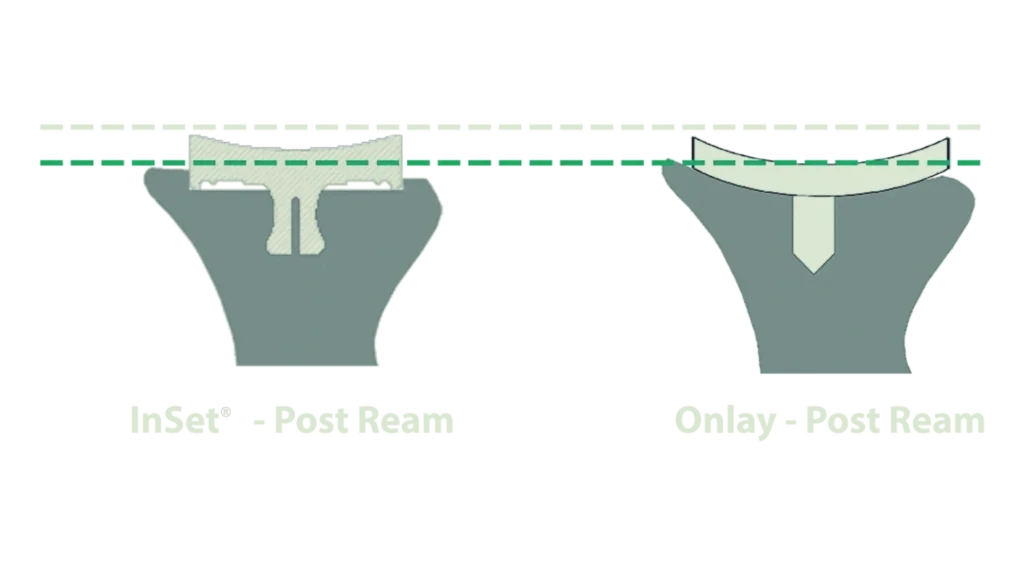
Implant design has also evolved. Traditional glenoids sit on the surface of the bone, while newer bone-preserving and inset (inlay) designs aim to:
- Reduce edge loading
- Improve force distribution
- Preserve bone for potential future revision
In my practice, I use modern implant systems, including inset glenoid designs when appropriate, based on each patient’s anatomy. I believe them to provide superior stability and longevity. The numbers from Finite Element Analysis, a computer-based method of modeling mechanical stress, show that the InSet® Total Shoulder design may reduce implant displacement stress by as much as 87% compared to traditional surface-mounted approaches.
The goal is not a specific implant, but choosing the right solution and placing it precisely.
Why Surgeon Experience Matters
Shoulder replacement is not just about the implant; it is about execution.
Recent studies published in both The Journal of Bone and Joint Surgery and the BMJ have demonstrated that:
- Higher-volume shoulder arthroplasty surgeons have lower complication rates
- They have lower revision and re-operation rates
- Outcomes improve with consistent surgical experience
Additional research shows that fellowship-trained shoulder surgeons have lower complication rates compared to general orthopaedic surgeons performing shoulder replacements.
This is because shoulder arthroplasty requires:
- Understanding complex glenoid deformity
- Restoring proper alignment and mechanics
- Selecting the appropriate implant
- Achieving precise placement
Experience does not eliminate risk, but it improves the likelihood of a durable, well-functioning shoulder replacement.
How to Recognize the Warning Signs
If you’ve had a shoulder replacement, most patients do very well long term. However, you should be evaluated if you notice:
- Return of pain after a period of improvement
- Increasing stiffness or loss of motion
- Clicking, grinding, or instability
- Weakness or decreased function
These symptoms do not always mean loosening, but they should be evaluated.
Your Role in Long-Term Success
The success of your shoulder replacement is a partnership. You can help protect your outcome by:
- Completing your rehabilitation program
- Maintaining rotator cuff strength and balance
- Attending routine follow-up visits
- Communicating early if symptoms change
Overall health, including bone health and activity choices, also plays a role in long-term implant performance.
Neeley,
DO
- You’ve been told you need a shoulder replacement and want a specialist opinion
- You have complex arthritis or known glenoid bone loss
- You’ve had a prior shoulder replacement and are developing new symptoms
- You want a surgical plan built around advanced imaging and precision techniques
Summary
Glenoid loosening remains an important long-term consideration after shoulder replacement, but it is less common and better understood than ever before.
Today, outcomes are driven by:
- Advanced imaging and 3D CT-based planning
- Improved implant designs
- Precise surgical technique
- Surgeon experience and specialization
- Patient engagement and compliance
For my patients, the goal is not just pain relief; it is a durable shoulder that performs well for years to come.
Frequently Asked Questions
Can glenoid loosening be prevented?
No implant can be guaranteed to last forever. However, careful planning, precise positioning, appropriate implant selection, and patient engagement all help reduce the risk.
What makes newer glenoid designs different?
Modern designs aim to improve load distribution and reduce stress at the bone-implant interface, while preserving bone for potential future revision.
How do I know if I need a shoulder replacement?
If pain and stiffness persist despite therapy, medications, or injections, a shoulder replacement may be appropriate. A consultation with a shoulder specialist can help determine the best course of action.